Poetic Sensibility
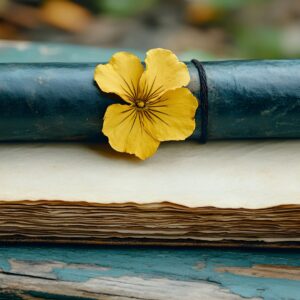
Let me start by saying, I’m no expert on the subject of how to write or read a “good poem,” nor can I offer you a working definition of what good poetry is supposed to be. No MFA, my background is Speech and Language Science. What I can share is what I’ve learned in the process of writing my own poems, and the poetic sensibility that has seeped into my brain over a lifetime. Poetry has always been an integral part of my world, both as a reader and, more importantly, as a listener. My young ears were filled with the sounds of Mother Goose, vinyl records of Shakespeare’s plays, and the Gilbert and Sullivan Songbook (my mother’s lullabies). Whatever poetry is, it enters our consciousness through its music, stays with us, and becomes part of our aural history.
Moreover, each poet creates a singular world, a sense of completeness in every poem she writes. A reader should come to an “ah, hah!” moment at the end of a good poem. The last lines of Melville Cane’s poem, I Have Seen, always bring out this very response in me- “…And once/ On a wild black road/ I saw a summer moon/ Weave a web of gold/ Out of a humming stretch of telephone wires.” The US poet Laureate, Billie Collins, tells us, “Don’t look at what the poem means. Look at how it feels, where it’s going, how it gets from its beginning to its end.” Close to this sense of completeness is the wisdom we derive from having heard or read a good poem. Elizabeth Alexander describes poets as the “truth tellers.” I love her image of the poet as a cartoon artist, drawing “bubbles” over people’s heads to uncover what they are really thinking. Alexander adds: “Poetry is diving into the wreck, not the story of the wreck.” (italics mine)
Speaking of telling the truth… the final aspect of good poetry, or writing in general, for that matter, I find to be the most difficult: “risk-taking,” the willingness to step out of yourself and hang over the edge. A few years ago, I had the privilege of being a participant in Marie Howe’s workshop at the Palm Beach Poetry Festival. Her book, What the Living Do, contains many poems about her brother living with and ultimately dying from AIDS. I, too, had a close relative who died of AIDS, but until that workshop, I had never given myself permission to write about it. Marie gave me the courage to do just that: stop self-editing, get my own hang-ups out of the way, “dive into the wreck.”
It is a work-in-progress for me, but several of the poems I have included in my latest poetry collection, A Yellowed Notebook, speak to this final quality of good poetry- vulnerability and fearlessness. What do YOU think?