
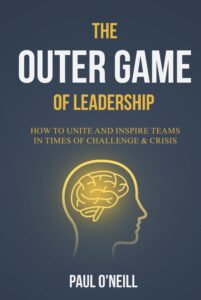
Dear Author Paul O’Neill,
Reading The Outer Game of Leadership: How to Unite and Inspire Teams in Times of Challenge and Crisis felt like discovering the silent language of leadership that most of us sense but rarely know how to speak. Your book shifts the conversation from control to connection—from managing performance to shaping the emotional and psychological climate in which teams can actually thrive. You reveal that people don’t just respond to what a leader says; they respond to what they feel in the leader’s presence. That truth runs like an electric current through every chapter.
Your exploration of “signals” and “atmosphere” gave me a new lens for understanding influence. I found myself underlining phrases about non-verbal cues—breath, tone, posture—and realizing how often those elements carry the real message in moments of uncertainty. I was struck by the notion that safety, not strategy, is the true foundation of performance. When teams sense safety, they align naturally; when they don’t, even the best plans collapse.
The practical tools you provide turn abstract concepts into behaviors that anyone can practice. Each one feels field-tested, born of lived experience rather than theory. I could imagine using them immediately to steady a tense meeting or to restore trust after conflict.
What also resonated was your framing of leadership as stewardship: of meaning, mood, and momentum. That idea reframes authority as something humbler and far more powerful. You remind readers that presence is a form of leadership that transcends words and strategies.
This book doesn’t teach leaders how to perform better; it teaches them how to be better—calmer, clearer, more attuned. And in a time when the world feels volatile and teams are stretched thin, that feels like the truest kind of leadership wisdom there is.
I will certainly share your book with others.
With gratitude,
Jules Whitcomb for Dear Author Book Reviews/Speak Up Talk Radio
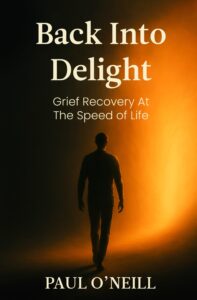
Dear Author Paul O’Neill,
Your book, Back Into Delight, arrived in my life during a time when the silence of absence felt deafening. I read the book expecting instructions, but instead I discovered a friend. What moved me most was the honesty in your voice—it carried the unmistakable weight of your lived experience, not polished theories. That made every page feel trustworthy.
The way you describe the body’s role in sorrow gave me a new perspective. I had never considered that despair lives not only in memory or mind, but in muscle, breath, and tone. Reading how you noticed signals—rather than waiting for a timetable—was a revelation. It permitted me to pay attention to what my body already knows, and to let that awareness become part of the healing process.
Your reflections on laughter and sound surprised me in the best way. To think that levity could return warmth to a face that has forgotten how to smile felt radical, and yet your words made it feel possible. I began experimenting with these small practices as I read, and the impact was immediate: not erasing sorrow, but softening its edges.
I also valued the compassion woven into your storytelling. You never pushed readers toward “moving on” or demanded milestones. Instead, you offered room to rest, stumble, and continue at a natural rhythm. That tone of patience felt like a hand at my back, steady but never forceful.
By the end, I recognized myself in your journey—not in the exact losses, but in the quiet, halting search for steadiness after life’s ground has given way. Your work reminded me that joy can be cultivated, even trained, without denying heartbreak.
Thank you for creating a book that shows me how to get Back Into Delight.
With gratitude,
Jules Whitcomb for Dear Author Book Reviews/Speak Up Talk Radio